Decorated Paper: Marbling, Paste Paper and Buntpapier
The patterned sheets on endpapers and covers are a craft of their own. In the German-speaking world they fall under the broad term Buntpapier — coloured or decorated paper.

What Buntpapier covers
Buntpapier is an umbrella term rather than one technique. It includes marbled paper, paste paper, block-printed and stencilled sheets, and the brocade papers once produced in southern Germany. The category groups them by purpose — decorated sheets used in binding and stationery — rather than by method.
Marbling: floating colour on a bath
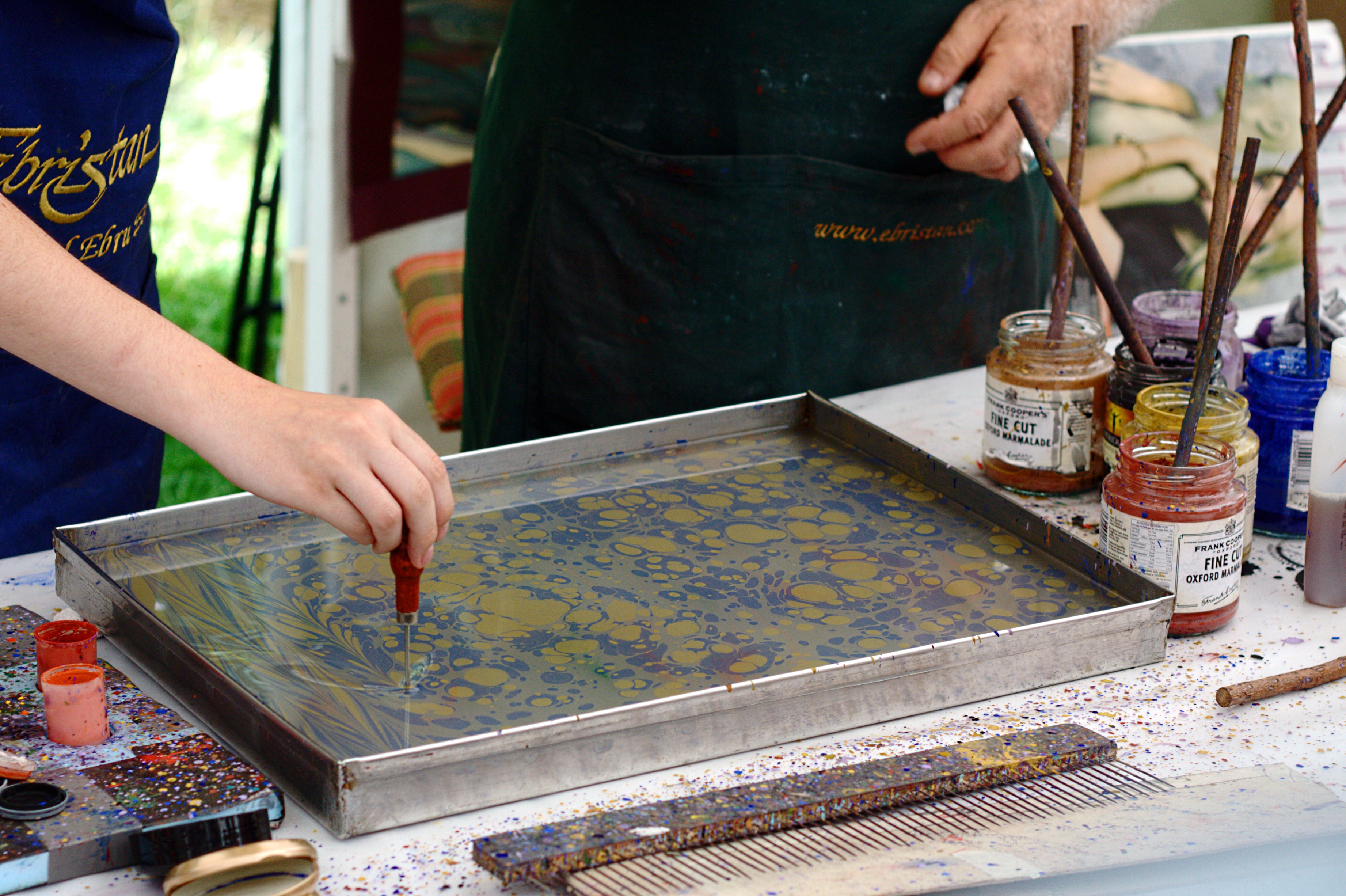
Marbling builds a pattern on the surface of a liquid and then lifts it onto paper in a single contact. The bath, historically thickened with carragheen (a seaweed extract), holds the colours so they float instead of dispersing.
Prepare the size
A viscous bath is mixed and left to settle so its surface is still.
Drop the colours
Diluted pigments are scattered onto the surface, where they spread into floating fields.
Comb the pattern
Rakes and combs draw the colours into the familiar veined and combed figures.
Lift the sheet
Paper, often pre-treated with a mordant, is laid onto the surface and lifted, taking the pattern with it.
Paste paper: a simpler bench method
Paste paper needs no bath. A coloured starch or flour paste is brushed onto a dampened sheet, then patterned while still wet — combed, stamped, or drawn into with a finger or tool. It is forgiving, repeatable in spirit if not in exact detail, and well suited to making coordinated endpapers for a small run of books.
Where decorated paper sits in a book
Decorated sheets most often appear as endpapers, the leaves joining the text block to the cover, and as cover papers over board. Matching the grain direction of these papers to the spine matters here too, so the boards stay flat over time.
